
Can Tokenization Fix the Gemstone Supply Chain?
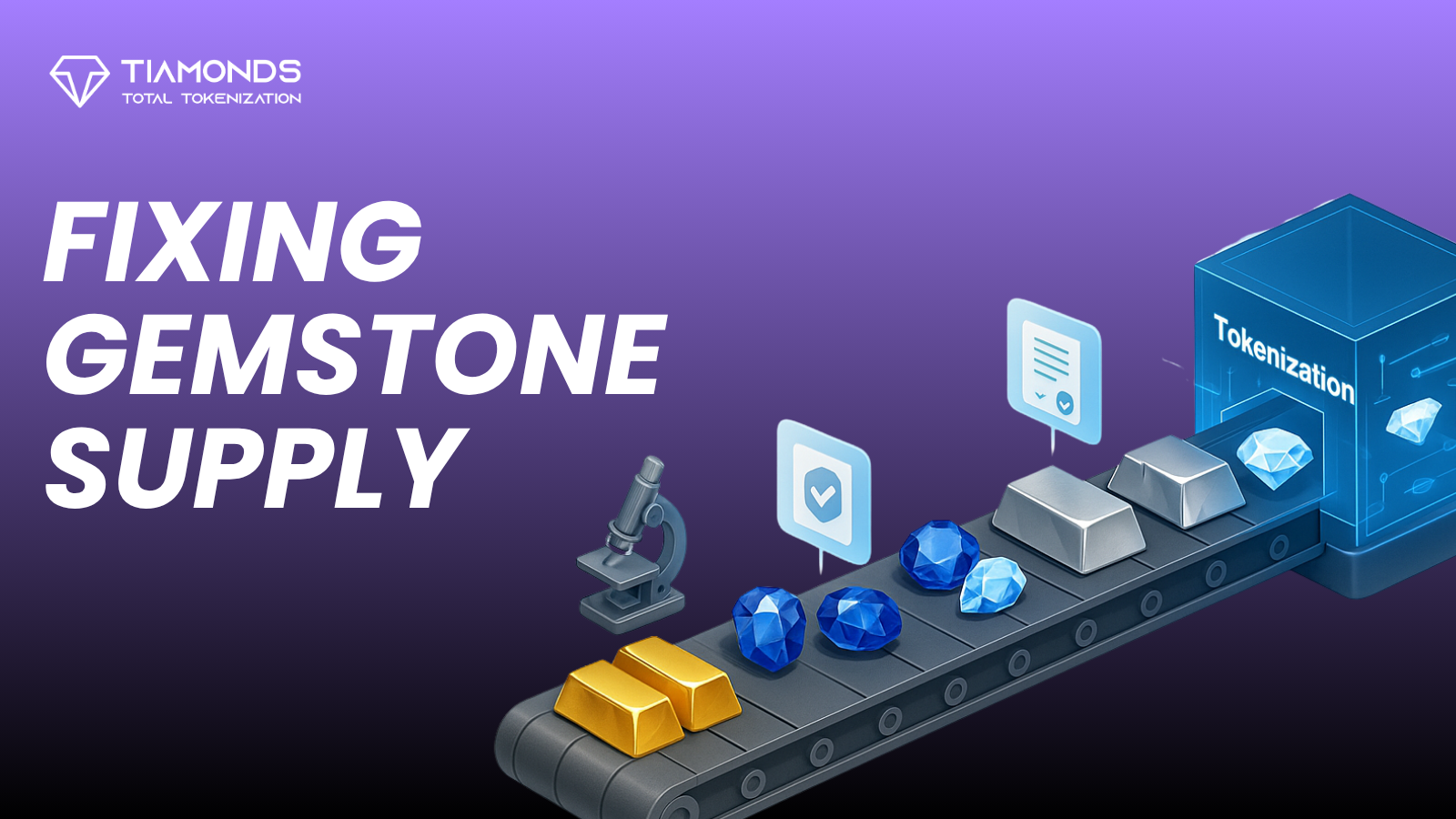
The gemstone supply chain, despite its global reach and billion-dollar valuation, remains plagued by opacity, inefficiency, and trust issues. From ethical sourcing and certification to logistics and final sale, each link in the chain suffers from a lack of transparency. Blockchain-based tokenization presents a transformative opportunity to address these problems. By assigning a unique, immutable digital representation to each gemstone, tokenization can unlock traceability, accountability, and investor-grade access. This blog explores how tokenization can reshape the gemstone industry, with Tiamonds, a marketplace for tokenized gemstones, serving as a case study of practical implementation.
Key Highlights
- The gemstone supply chain faces persistent issues around origin verification, authenticity, and liquidity.
- Tokenization allows for the creation of secure, immutable digital twins of physical gemstones.
- Tiamonds uses NFTs to represent ownership, provenance, and certification data on-chain.
- Tokenization promotes ethical sourcing, fraud prevention, transparent trade, and digital ownership.
- The gemstone market stands to benefit from increased trust and accessibility if tokenization becomes standard.
What Is the Gemstone Supply Chain Problem and Why Does It Matter?
Gemstones are luxury commodities valued for their rarity, beauty, and symbolism. However, the path from mine to market is often riddled with problems. These include unverifiable claims of ethical sourcing, fraudulent certifications, inconsistent grading standards, and long, opaque transaction chains. The lack of digital infrastructure and trust frameworks limits broader participation in gemstone investment, reduces liquidity, and fosters black market activities.
What is Tokenization?
Tokenization is the process of creating a digital representation of a real-world asset on a blockchain. In the context of gemstones, this involves issuing a non-fungible token (NFT) or a similar digital asset that is cryptographically linked to a specific physical gemstone. Each token carries metadata, including origin details, certification records, ownership history, and trading conditions. This token can be traded on digital platforms, offering a verifiable and secure way to manage the asset’s lifecycle.
What Are the Key Challenges in the Gemstone Ecosystem?
a. Lack of Transparency
Gemstone supply chains often span multiple countries and intermediaries, each with its own documentation practices. This fragmentation makes it difficult to track origin, grading, and handling history.
b. Counterfeit and Fraud
Synthetic gemstones and fraudulent grading certificates have flooded the market. Without an authoritative ledger, distinguishing genuine stones from counterfeits becomes challenging.
c. Illiquidity
Gemstones are traditionally considered static assets. They lack standardized financial instruments for trading or investing, which deters participation from broader investor segments.
d. Accessibility
Institutional buyers and affluent collectors often dominate the gemstone market. It lacks digital infrastructure that would allow seamless global access for secure investment and ownership.
4. Supply Constraints in the Gemstone Market
Recent studies and industry reports highlight a tightening supply in the gemstone market, driven by various factors:
- Geopolitical Tensions and Sanctions: Sanctions on major gemstone-producing countries have disrupted supply chains, leading to shortages and increased costs. Even though the colored gemstone sector relies more on artisanal and small-scale mining, these disruptions have had a ripple effect across the industry .
- Infiltration of Synthetic Gemstones: The jewelry industry is increasingly concerned about the infiltration of synthetic colored gemstones, prompting stricter measures such as the American Gem Trade Association’s (AGTA) ban on synthetic, man-made, and lab-grown gemstones at its trade shows to avoid buyer confusion.
- Erratic Gemstone Findings: Shortage in supply of rough emeralds, even though the major producers currently occupy more miners. Findings are erratic. Known reserves do not always translate into gem findings: quality and uncontrollable settings in the mines with irregular veins .
These supply constraints underscore the need for greater transparency and traceability in the gemstone supply chain, which tokenization can help address.
How Tokenization Addresses These Challenges
a. Immutable Records
Blockchain ensures that once a gemstone’s data is recorded, including its cut, clarity, carat, color and certification, it cannot be altered. This increases trust in the authenticity and grading of the asset.
b. Full Traceability
From mine to vault, every event in the gemstone’s journey can be documented and linked to the token. Buyers can verify ethical sourcing and supply chain compliance with a simple scan.
c. Global Liquidity
Tokenized gemstones can be listed on global marketplaces for trade. This creates liquidity for traditionally illiquid luxury assets, opening the market to both retail and institutional participants.
d. Digitized Ownership
Tokenization enables a modern, secure, and transferable ownership experience. The digital certificate of ownership can be stored in a crypto wallet, traded, or held as a long-term asset without needing to move the physical gemstone.
Tiamonds: A Real-World Example
Tiamonds is a Web3 marketplace that tokenizes physical diamonds, gold, silver, platinum, and recently sapphires, as NFTs. Each gemstone listed on the platform is securely stored, insured, and certified. The corresponding token is minted on-chain and contains verifiable metadata linking it to the physical stone.
By enabling purchase, trade, and transfer of tokenized gemstones, Tiamonds brings the values of trust, transparency, and liquidity into the gemstone ecosystem. Investors can browse over 20,000 gemstones, select by investment parameters, and hold them securely as digital assets while maintaining real-world value.
Moreover, Tiamonds uses blockchain to manage ownership records, trace history, and ensure compliance with Know Your Customer (KYC) and Anti-Money Laundering (AML) standards. This enhances regulatory confidence and consumer protection.
Broader Impacts on the Industry
The tokenization model adopted by Tiamonds signals a shift toward a more transparent, traceable, and trustworthy gemstone industry. It opens new use cases for luxury brands, digital marketplaces, insurers, and even supply chain auditors.
In the future, tokenization could extend to origin-country governments, enabling resource-rich nations to track gemstone exports and claim fairer royalties. Certification bodies could issue digital attestations directly linked to tokens, eliminating paper-based fraud. Retailers could offer embedded NFTs with jewelry, adding digital provenance and post-sale engagement.
Conclusion
Tokenization alone cannot fix all the issues embedded in the global gemstone supply chain. However, it offers a powerful tool to address its most persistent challenges such as opacity, fraud, and illiquidity. By turning gemstones into digital assets with verifiable records, platforms like Tiamonds are not just innovating luxury investment. They are laying the groundwork for a future where every gem tells a transparent, traceable story.