
On-Chain vs Off-Chain Asset Tokenization
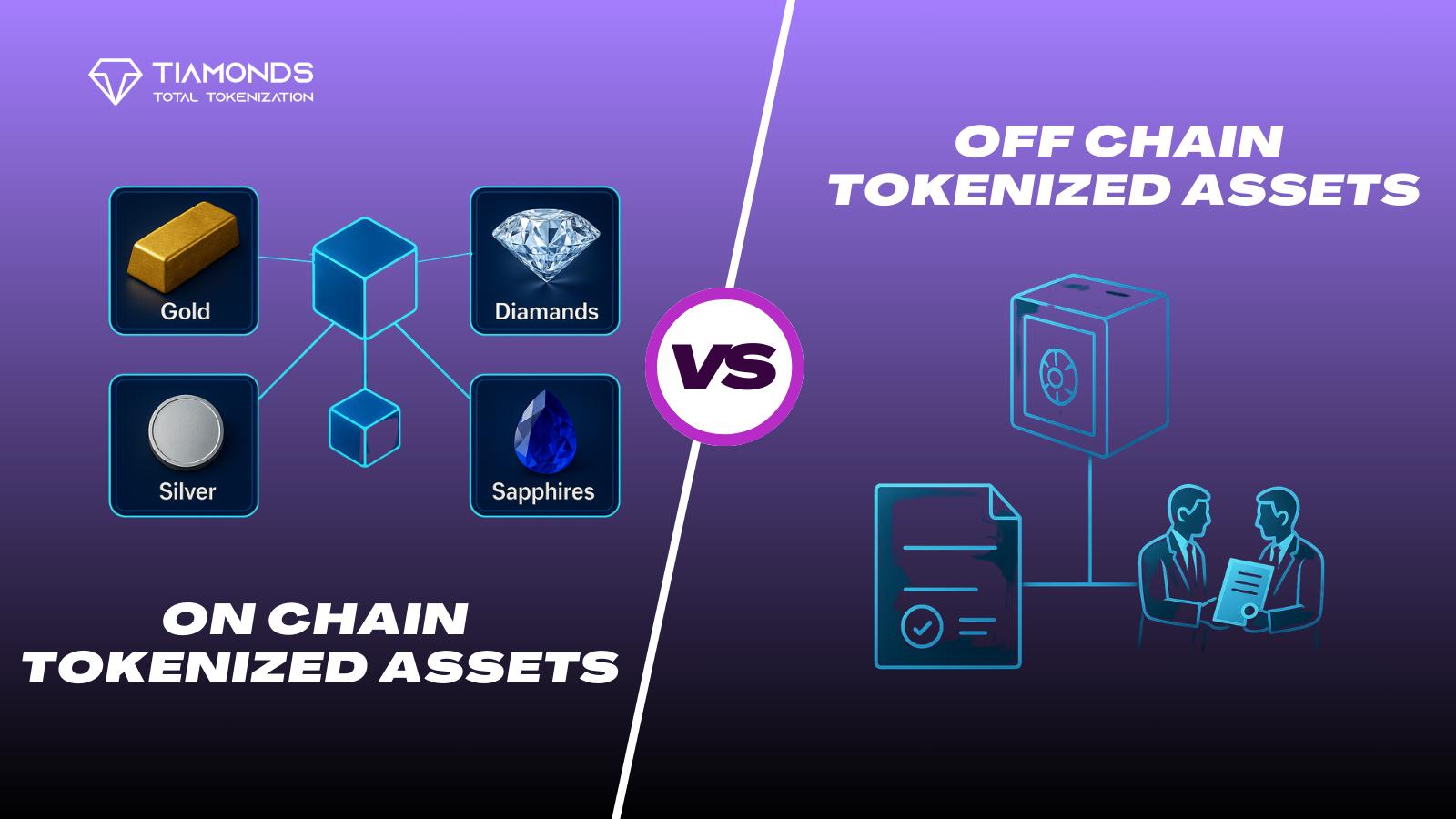
Tokenization is redefining asset ownership and transferability in the digital world. At Tiamonds, this innovation is at the core of what we do, which is tokenizing real-world luxury assets such as diamonds, gold, silver, and sapphires. However, not all tokenization is created equal. There are two prominent models: on-chain and off-chain asset tokenization. Each comes with its distinct advantages and challenges.
This blog compares the two approaches to help users, investors, and enthusiasts understand which model best supports trust, transparency, and long-term value. With Tiamonds adopting a unique on-chain asset tokenization model without fractional ownership, the distinction is particularly important for our ecosystem.
Key Highlights
- Tokenization allows physical assets to exist on the blockchain as digital representations.
- On-chain tokenization is fully verifiable and executed through smart contracts.
- Off-chain tokenization involves external data sources and third-party validation.
- Tiamonds adopts an on-chain tokenization model for full traceability and ownership integrity.
- Understanding the difference helps users make informed choices in the evolving world of real-world assets (RWAs).
Introduction to Asset Tokenization
Asset tokenization is the process of converting ownership rights of a physical or digital asset into a digital token on a blockchain. This token acts as a representation of the asset and can be traded, stored, or transferred in a secure and efficient manner. At Tiamonds, we focus on tokenizing high-value assets like diamonds, gold, silver, and sapphires — each backed one-to-one with a real-world physical asset. However, how these assets are recorded and managed on the blockchain determines the system’s transparency, security, and trust.
What is On-Chain Asset Tokenization?
Definition
On-chain asset tokenization involves recording all relevant asset data directly on the blockchain. The token and its attributes exist and function entirely through smart contracts and decentralized protocols, providing complete transparency.
Benefits:
- Transparency and Immutability
Every asset token created and every transaction is permanently recorded on the blockchain, visible to anyone. This enhances trust and accountability. - Decentralization
By leveraging smart contracts, asset verification and management are executed automatically, minimizing human error or manipulation. - Security and Auditability
Since all information is stored on the chain, it’s easily auditable and resistant to tampering. Ownership records are cryptographically secured. - Real Ownership
Tokens represent full, verifiable ownership of a real-world item. Tiamonds provides full ownership, not fractions, to maintain asset integrity and value. - Interoperability
On-chain tokens can be integrated into DeFi ecosystems, NFT platforms, and wallets without dependency on centralized intermediaries.
Challenges
- Scalability and Cost
Blockchain transactions can be expensive and slow during network congestion, affecting user experience. - Compliance and Regulation
Tokenizing real assets on-chain often requires robust legal frameworks to ensure real-world enforceability of ownership rights. - Custodianship Complexity
Safeguarding the physical asset corresponding to the on-chain token demands rigorous custody practices adopted by Tiamonds.
How Tiamonds Utilizes It
Tiamonds uses on-chain tokenization to create a one-to-one mapping of each luxury asset to an NFT, stored immutably on the blockchain. Every diamond, gold, silver, or sapphire token on Tiamonds has verified physical backing and can be audited on-chain. This system ensures transparency, verifiability, and seamless transfer of ownership without any middlemen.
All physical assets are authenticated and verified by LCX, Tiamonds’ licensed physical validator, ensuring each token is backed by a real-world item with legal enforceability.
What is Off-Chain Asset Tokenization?
Definition
Off-chain asset tokenization refers to creating tokens on a blockchain that represent assets whose actual data, verification, or custodianship exists outside the blockchain. The blockchain holds a reference or pointer, but not the asset details themselves.
Benefits
- Reduced Costs
Since not every detail is stored on the blockchain, the cost of storing data and executing smart contracts is reduced. - Operational Flexibility
Off-chain systems can be adapted more easily to legacy systems and regulatory frameworks, often required in traditional industries. - Scalability
Off-chain models can handle large volumes of assets or transactions without affecting blockchain performance.
Challenges
- Lack of Transparency
The key asset data and verification processes occur outside the blockchain, requiring trust in the issuer or third-party custodian. - Centralized Risk
Off-chain models typically rely on central authorities to validate ownership and authenticity, introducing single points of failure. - Limited Auditability
Unlike on-chain models, not all historical records or verifications are available to the public or automated for audit. - Trust Dependency
Users must place trust in the issuing platform or custodian, which may not always be fully verifiable.
Use Cases Outside Tiamonds
Off-chain tokenization is often used in traditional financial systems, real estate, or for highly regulated assets, where on-chain automation isn’t fully compliant yet. These models may work well for institutions but lack the transparency and autonomy that blockchain promises.
Summary: Which One Is Right for You?
Both on-chain and off-chain asset tokenization approaches offer valid advantages depending on the application. However, on-chain tokenization emerges as the superior option for projects aiming for full transparency, security, and decentralization, especially in the luxury asset space.
Tiamonds has tokenized diamonds, gold, silver, and sapphires entirely on-chain to ensure that users hold real, traceable, and unshared ownership of tangible assets. This model aligns with the Web3 ethos and provides long-term confidence to collectors and investors alike.
Final Thoughts
As blockchain technology evolves, the debate between on-chain and off-chain asset tokenization will remain central to how real-world assets are digitized and distributed. At Tiamonds, we have committed to building a transparent and secure tokenization ecosystem powered by on-chain integrity. Whether you are a first-time collector or a seasoned investor, understanding the differences between these models empowers you to make informed decisions in the world of tokenized assets.