
Nickel at a Crossroads: Structural Demand Meets Strategic Supply Constraints
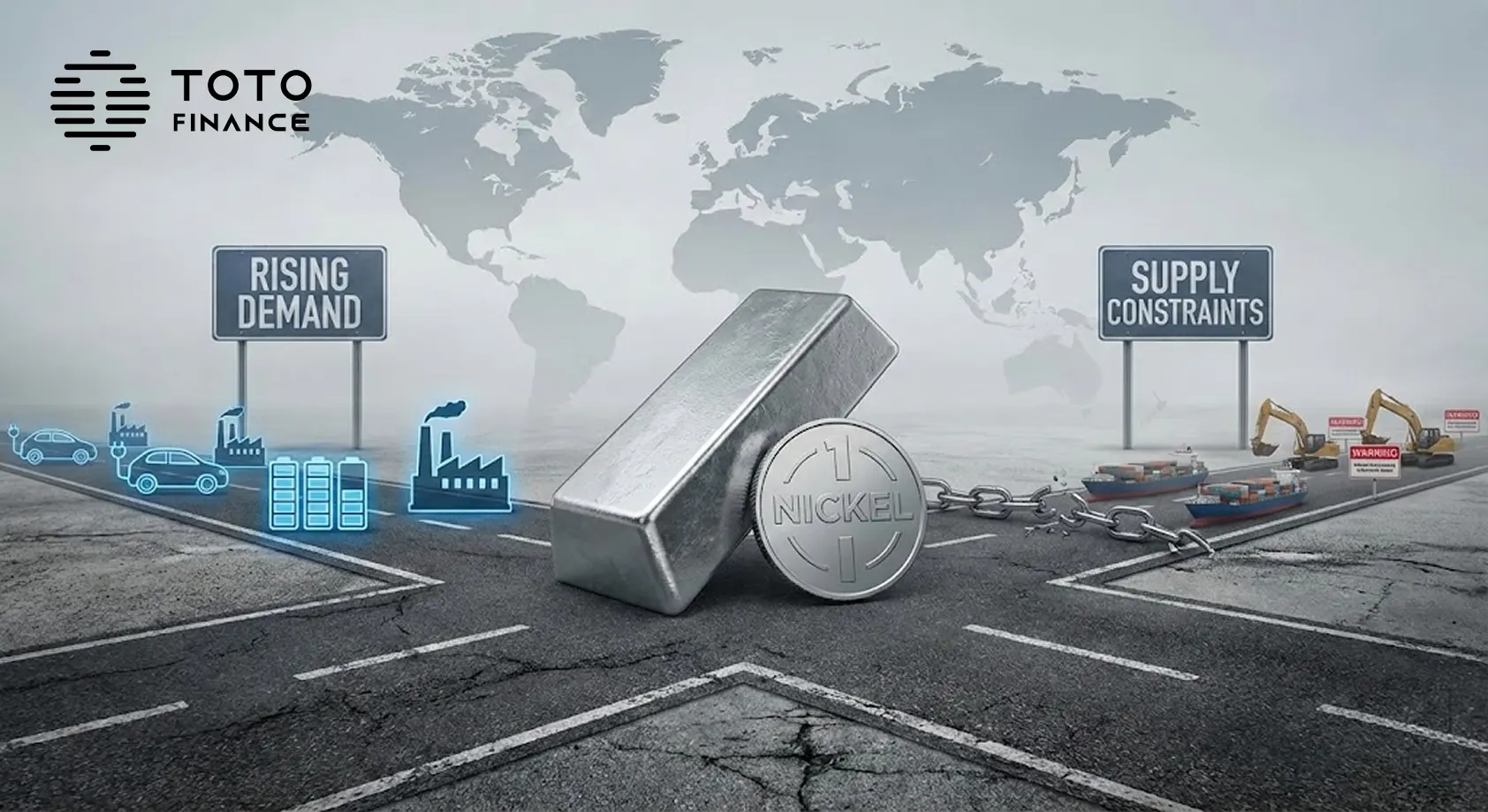
In late 2025 and early 2026, nickel, a metal essential to electrification, energy storage, and advanced industrial technologies, has shown renewed price strength after a prolonged period of subdued performance. Unlike the historic rallies seen in precious metals, nickel’s price dynamics reflect a unique interplay of policy intervention, supply realignment, growing industrial demand, and macroeconomic influences. As industrial economies and clean-energy transitions deepen their structural reliance on nickel, markets are recalibrating how they value this critical industrial input and how access to it should evolve.
As industrial metals become increasingly strategic, modern infrastructure for accessing and holding real assets is becoming just as important as the assets themselves. Platforms such as Toto Finance are building this next layer of commodity infrastructure by enabling regulated, transparent, and digitally native access to physical commodities. More on this approach can be explored at https://totofinance.co.
This article examines the latest price developments in nickel, highlights the structural drivers shaping its market, discusses supply constraints and policy impacts, and explains why digital ownership frameworks like tokenization are becoming increasingly relevant as commodity markets evolve.
Recent Price Developments in Nickel
Global nickel prices have shown renewed momentum toward the end of 2025 and into early 2026:
- Nickel traded largely range-bound around $15,000 per metric ton for much of 2025 before regaining strength in late December. https://tradingeconomics.com/commodity/nickel
- LME three-month nickel contracts reached nine-month highs near $16,500–$16,700 per ton, driven by supply expectations and policy signals.
https://news.metal.com/newscontent/103698385/Nickel-Prices-Soar-to-Phase-Highs-on-Dec-30-2025-Driven-by-Fund-Flows-and-Supply-Disruptions - As of early January 2026, prices remain elevated despite short-term volatility, reflecting a shift away from the oversupply narrative that dominated earlier in the year.
These movements suggest nickel is transitioning from a market defined by excess supply into one increasingly shaped by strategic supply management and industrial demand alignment.
Nickel’s Role in the New Industrial Economy
Nickel differs fundamentally from precious metals such as gold or silver. Its value is driven almost entirely by industrial utility, not monetary hedging.
Nickel is indispensable for:
- Stainless steel production, still the largest source of global demand
- Battery technologies, particularly high-energy-density EV chemistries
- Advanced alloys used in aerospace, infrastructure, and renewable energy systems
As highlighted in a recent Reuters analysis on critical minerals, nickel is increasingly classified alongside lithium and copper as a strategic material essential for national energy security and industrial competitiveness: https://investingnews.com/daily/resource-investing/base-metals-investing/nickel-investing/nickel-forecast/
Underlying Drivers: From Oversupply to Strategic Supply Discipline
The Oversupply Phase
For much of 2025, nickel markets struggled with oversupply, particularly from Indonesia, the world’s largest producer. This surplus capped prices and created a prolonged consolidation phase, dampening investor sentiment despite long-term demand growth.
https://investingnews.com/daily/resource-investing/base-metals-investing/nickel-investing/nickel-forecast/
Policy Intervention and Supply Realignment
In late December 2025, Indonesia announced plans to cut mining output quotas, explicitly aiming to stabilize prices and reduce excess supply. This policy shift marked a turning point, triggering immediate price reactions across global nickel markets and signaling a move toward intentional supply discipline.
Such interventions underscore how nickel markets are increasingly shaped not only by geology and demand, but also by strategic resource management.
Market Mechanics: Why Nickel Prices React Sharply
Nickel pricing is particularly sensitive because it sits at the intersection of:
- Policy risk, especially from dominant producing nations
- Inventory dynamics, where relatively small shifts can have outsized effects
- Industrial demand visibility, tied to infrastructure, EVs, and manufacturing cycles
This makes nickel one of the most reactive industrial metals where real-world decisions translate quickly into price action.
Scarcity, Complexity, and the Reality of Mining
Despite its abundance in the earth’s crust, economically viable nickel supply is far more constrained. Mining projects are capital-intensive, environmentally complex, and geographically concentrated. Long development timelines mean supply cannot respond quickly to rising demand, reinforcing structural tightness over time.
These realities add a scarcity premium that markets are increasingly pricing into nickel’s valuation.
Tokenization and the Future of Commodity Access
As nickel’s strategic importance grows, so does the need for better access mechanisms. Traditional commodity markets remain burdened by:
- slow settlement cycles
- opaque custody structures
- high barriers for non-institutional participation
Tokenization offers an alternative framework:
- Digitally native ownership backed by physical assets
- Transparent proof of custody and verification
- Global accessibility and fractional participation
- Programmable use cases, including collateralization and financing
Toto Finance applies this model across commodities by combining regulated custody, physical validation, and blockchain settlement allowing real assets like metals to move with digital efficiency while remaining anchored to the physical world. Learn more at https://totofinance.co.
The Path Forward: Strategic Metals, Digital Infrastructure
Nickel enters 2026 at a clear inflection point:
- Demand is structural, not cyclical
- Supply is becoming strategically managed
- Markets are repricing industrial relevance
- Infrastructure for ownership is evolving
As global economies invest in electrification, storage, and resilient supply chains, metals like nickel will only grow in importance. At the same time, how these assets are accessed, held, and transferred will define who participates in this next phase of commodity markets.
Digital ownership is not about reinventing commodities, it is about modernizing the rails beneath them. Nickel’s evolution illustrates why infrastructure matters just as much as price.