
Commodities at Historic Peaks: Why Gold, Silver, and Industrial Metals Are Repricing and the Path Forward for Ownership
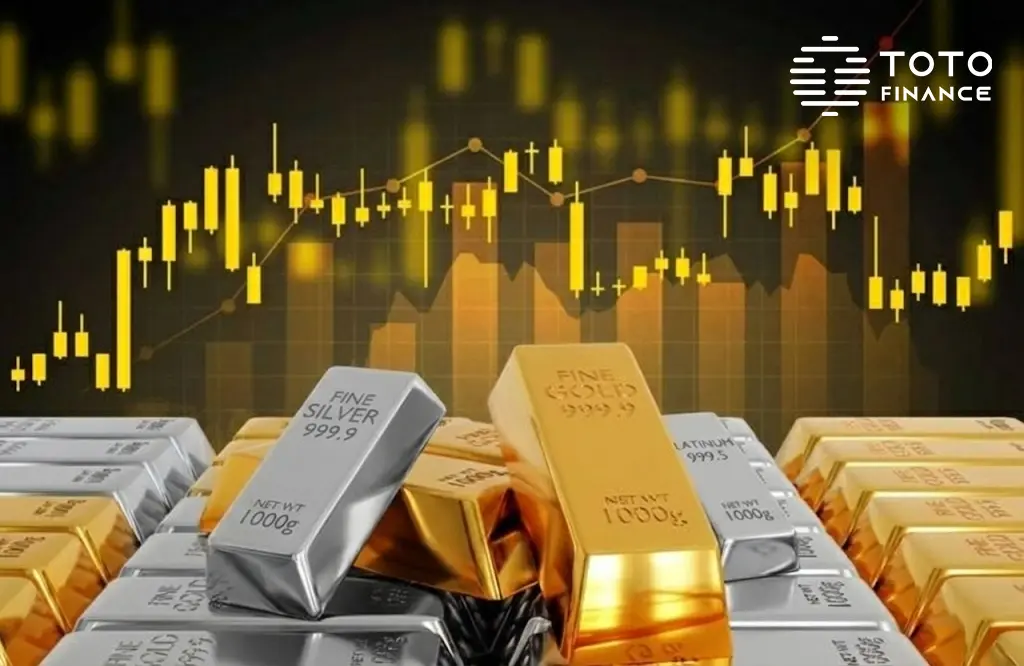
In the final weeks of 2025, global commodity markets have delivered some of the most dramatic price movements in modern history. Gold, silver, and copper, three pillars of the global real-asset complex. have surged into record territory amid a structural interplay of macroeconomic forces, industrial demand growth, and constrained supply. These movements signal more than short-term momentum; they reflect deep shifts in how markets value scarce resources and how investors and industry players must rethink access, ownership, and utility.
This article examines the drivers behind the historic price rallies, highlights scarcity and industrial demand dynamics, and explains why now, more than ever, digital ownership structures like tokenization matter for broadening access and unlocking new capital-market infrastructure.
Historic Rally Across Key Metals
Global markets have recently witnessed an extraordinary convergence:
- Gold has traded near fresh all-time highs, climbing roughly 70% year-to-date in 2025 as investors reprice risk and seek tangible stores of value. Business Insider
- Silver has outpaced most commodities, rallying more than 150% this year and surpassing prior records as both investment and industrial demand intensify. Barron’s
- Copper, the core industrial metal, has also moved to record levels, reflecting tightening physical supply and strong demand tied to electrification and related infrastructure build-outs. TechStock²
Moreover, some analysts report growing anticipation that silver could trade above $100 per ounce in 2026, underscoring lingering bullish sentiment. Kitco
These price movements collectively illustrate a broader repricing of real assets, influenced by persistent macro drivers and structural scarcity in underlying markets.
Underlying Drivers: Scarcity Meets Demand
Macro Tailwinds and Safe-Haven Flows
One of the dominant themes boosting precious metals has been the expectation of monetary easing. Late-year market pricing suggests additional U.S. Federal Reserve rate cuts in 2026, which tends to reduce the opportunity cost of holding non-yielding assets like gold and silver. At the same time, geopolitical uncertainty and softening yield curves have amplified demand for traditional safe-haven assets. Investing.com
These forces have supported gold and silver even as broader risk assets rallied, suggesting that the safe-haven narrative is co-existing with industrial demand drivers rather than competing against them.
Industrial Usage and Structural Demand
Unlike gold, whose gains are driven largely by macro and store-of-value factors, silver and copper also benefit from robust industrial consumption:
- Silver plays a critical role in electronics, solar photovoltaic panels, EV components, and advanced sensors, creating upward pressure on demand that has outpaced supply for years. Barron’s
- Copper: essential for electrical grids, renewable energy, large industrial motors, and data centers, has seen structural demand growth driven by electrification, decarbonization, and digital infrastructure expansion. TechStock²
Unlike temporary spikes driven by sentiment alone, this real, physical demand elevates commodity prices in a way that reflects long-term shifts in economic structure rather than short-term trading flows.
Supply Constraints and Scarcity Dynamics
Physical scarcity is equally influential. Mining output, particularly for base metals, has faced industry-wide bottlenecks:
- New mine development is slow, capital-intensive, and increasingly constrained by environmental permitting and geopolitical risk.
- Existing deposits are experiencing declining ore grades, making extraction more expensive and less responsive to rising demand.
These supply challenges, coupled with firm industrial usage, create structural scarcity, which markets reflect in price. While near-term supply may see tactical shifts or inventory reallocations, the long-term balance sheet remains tight.
Market Mechanics: Why Prices Are Amplified
Commodity prices are shaped by both benchmark pricing mechanisms and global trading dynamics:
- Futures markets for gold, silver, and copper act as the central discovery engines, integrating expectations for monetary policy, geopolitical risk, and industrial demand into price.
- Thin liquidity around year-end and concentrated flows can exacerbate volatility, especially in precious metals.
- Market sentiment, including speculative positions, ETF inflows, and inventory movements, can create accelerated moves as real demand catches up with expectations.
This combination of structural and sentiment components has helped propel commodities into rare simultaneous highs, a phenomenon observed across precious and industrial metals.
Tokenization: A New Paradigm for Commodity Ownership
As markets reprice real assets, the mechanisms through which investors access and own these commodities matter more than ever. Traditional commodity ownership suffers from significant limitations:
- Logistical friction in physical delivery and settlement.
- Custody and storage complexity, with associated costs and counterparty risk.
- Limited fractional access for retail and non-institutional participants.
Tokenization transforms these constraints:
- Instant settlement and global transferability.
- Transparent on-chain proof of custody and auditability.
- Fractionalization, lowering barriers to participation.
- Programmability, enabling more sophisticated usage such as collateralization.
By turning physical metals into digitally native assets, tokenization bridges the gap between traditional commodity markets and modern capital-market infrastructure.
The Path Forward: Scarcity, Demand, and Digital Access
Entering 2026, several themes are likely to remain central:
- Scarcity persists as demand continues rising in both industrial and investment domains.
- Monetary dynamics will continue to shape investor flows into safe-haven commodities.
- Tokenization and digital ownership frameworks will play a critical role in how global investors and industrial users access and manage real assets.
Real assets, historically undervalued in modern portfolio contexts, are now being revalued by markets that recognize both their economic utility and scarcity. This recalibration presents opportunities not only for investors but also for new infrastructure that democratizes access and reduces longstanding inefficiencies.
As the economic landscape evolves, digital ownership mechanisms may prove to be the infrastructure that unlocks broader participation and utility, redefining how the world engages with real, tangible value.